POPUP / Insights
Entering the U.S. market means choosing a particular audience, place and moment. A pop-up can introduce a global brand in a local context while revealing the questions people ask when they encounter it in person.
Originally published December 15, 2023. Updated September 29, 2026.
Choose a market before choosing a format
A shopping district, a neighborhood event and a regional mall offer different conditions for discovery. Look at who uses the location, why they visit and how much time they have. The most prominent address is not automatically the most useful setting for a particular product.
Local research should inform the hours, language, presentation and visitor journey. Avoid treating a city or demographic group as a single set of preferences. Conversations with local partners and prospective customers can reveal practical details that a broad market profile misses.
Keep the identity; adapt the introduction
The aim is to make the brand understandable without flattening what makes it distinctive. Materials, product stories and visual identity can remain consistent while demonstrations, gifting occasions and service adapt to the context.
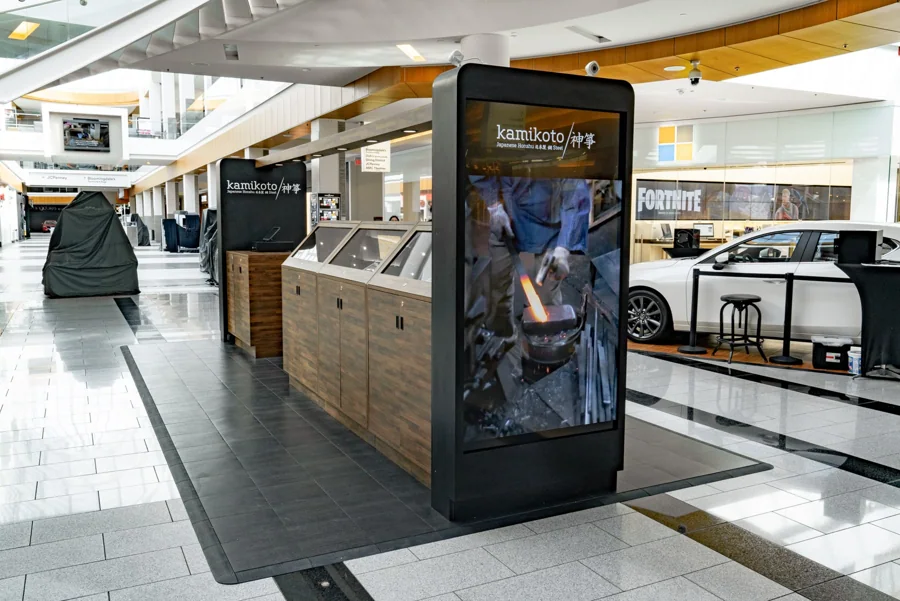
Kamikoto's Roosevelt Field kiosk placed individual products at the center of the presentation during a Father's Day retail moment. The format made room for close inspection and conversation. It connected the product story with a shopping occasion that visitors already understood.
Use physical discovery to answer unfamiliar questions
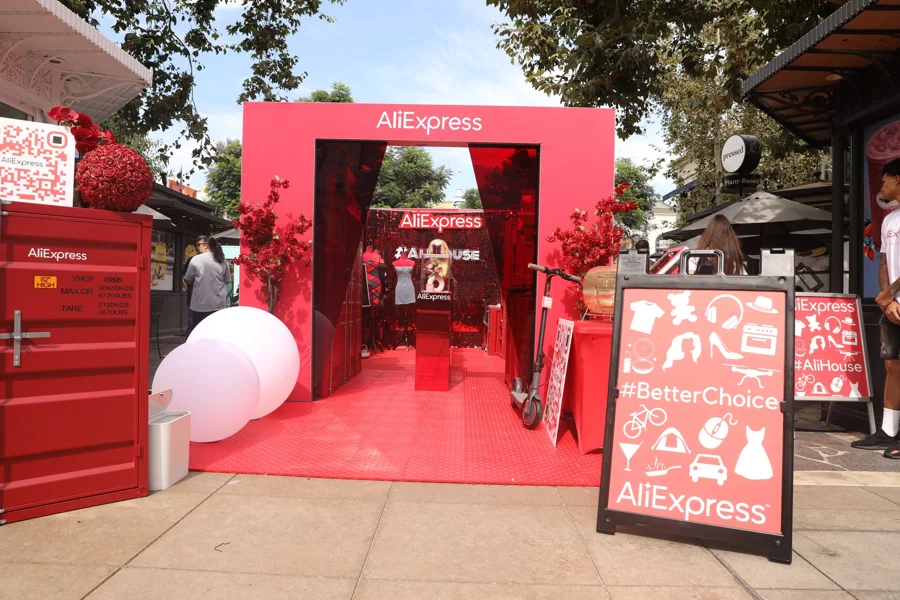
For an online-first or overseas brand, guests may want to see scale, texture, finish or usability before making a decision. AliExpress's Los Angeles pop-ups brought a selection of products into a physical setting where visitors could discover them directly.
Equip the team to explain the product, purchase journey and follow-up clearly. Useful questions can concern availability, delivery, care or the relationship between the temporary store and the online offer. Record recurring questions so they can improve both the experience and the wider communication.
Treat the first activation as a learning opportunity
Review which products drew interest, where visitors needed more information and whether the setting attracted the intended audience. Separate local observations from assumptions about the whole country. A successful introduction in one market is a starting point for testing another.
Use those findings to refine the next location, assortment and message. A considered local experience can preserve the brand's identity while giving new customers a clearer reason to engage with it.