Project location: New York, NY · Project context: 2026 · Prepared by POPUP from the project archive in October 2026.
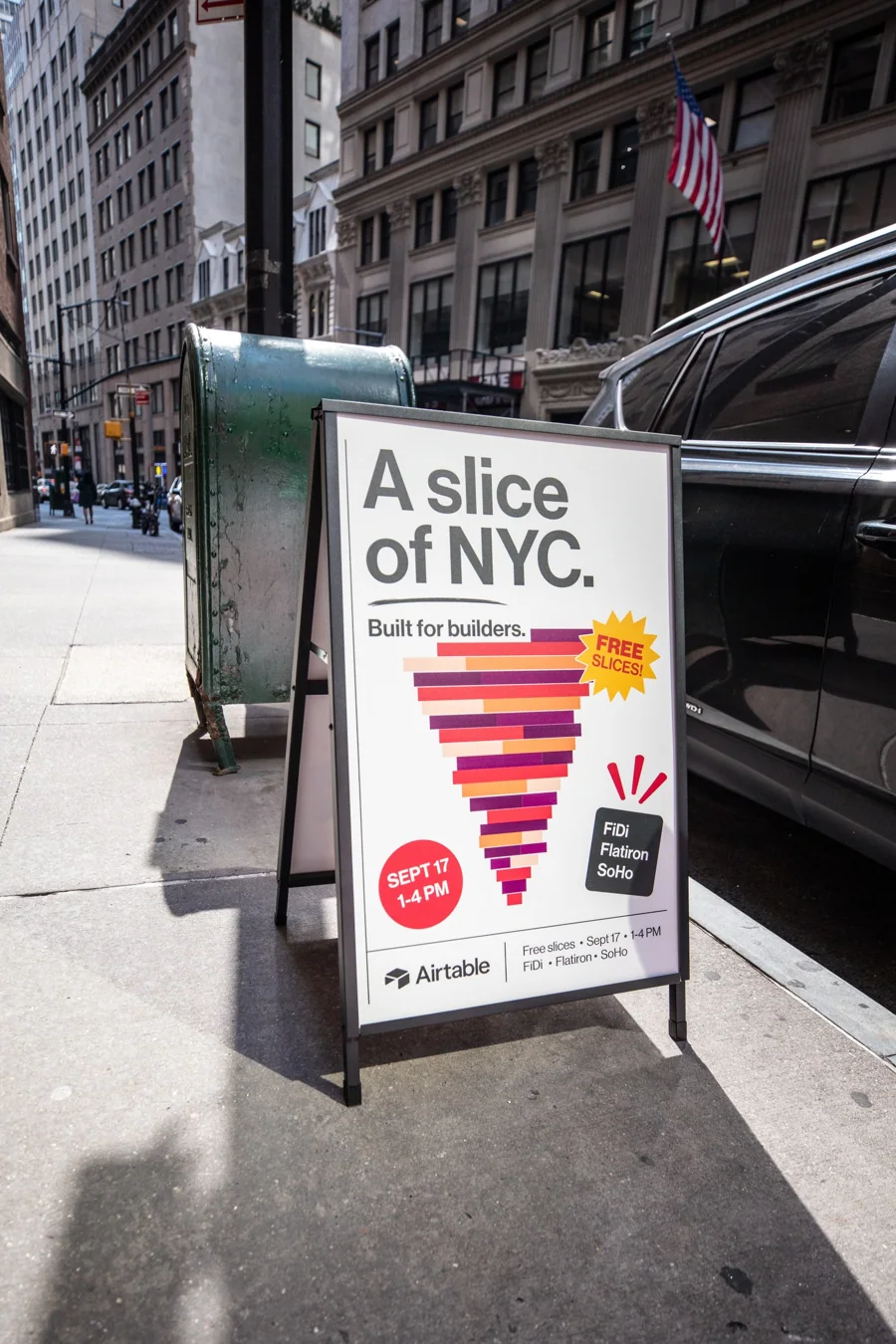
Business conversations do not always need a conference room. Airtable's New York pizzeria campaign made a familiar local ritual the invitation, with neighborhood venues and branded pizza boxes carrying the idea from sidewalk to counter.
What should a B2B neighborhood activation brief resolve first?
Define who the invitation is for and what happens when they arrive. An appointment with a business guest and a spontaneous neighborhood visit can share a venue, but their hosting needs may differ. State which conversations the brand team will lead and which parts of the encounter the production team should deliver.
Airtable used New York pizzerias and branded pizza boxes as the setting for a local encounter. Use the planning questions below to define a new neighborhood activation, from venue permissions and guest hosting to campaign content and follow-up.
Separate the shared campaign from each host venue
For every proposed location, ask what the host needs to keep operating and which surfaces or spaces can carry the activation. Document access, opening hours, branding approvals and the person who can resolve a site issue. Build a common delivery brief while leaving room for the differences between venues.
Make the guest offer and the brand conversation distinct
Explain what a visitor receives, whether any conditions apply and where they can ask about the brand. Give hosts a clear handoff when a guest wants a business conversation. If contact details will be collected, assign ownership of the explanation, consent and follow-up rather than treating participation as permission to market.
Brief campaign content before the activation day
Specify the coverage needed across the whole program and at each location. Agree the formats, approval route and intended uses with the team commissioning the work. Separate a complete campaign recap from location-specific edits, and plan access so filming can happen alongside the host business and guest experience.
Compare proposals against the same operating assumptions
Ask each partner to distinguish confirmed venues from sourcing assumptions, supplied assets from new production, and brand-team responsibilities from on-site staffing. Keep venue approvals, guest hosting, campaign distribution and follow-up visible in the scope. This makes proposals easier to compare without reducing the decision to a build price alone.
Who delivered the experience
POPUP coordinated the physical campaign across the pizzeria partners, bringing venue sourcing, branded production, staffing and on-site delivery together with event photography and film.
Created with Airtable and the participating pizzerias: Lucia Pizza of SoHo, Tappo and Traditas. Airtable supplied its brand assets and owned the broader marketing strategy and distribution.
What the experience made possible
Neighborhood pizzerias gave Airtable a recognizable local setting, connecting its identity with the simple pleasure of a New York slice.
Project questions
Where did the experience take place?
Airtable: New York, NY.
What was the delivery scope?
Pizzeria partnerships; Branded production; Staffing & on-site delivery; Campaign content.
What should a neighborhood activation brief define?
Describe the audience and guest offer, the number of locations, timing and the host businesses involved. Separate the physical experience from the wider marketing plan: identify who approves venue branding, supplies campaign assets, manages guest conversations and handles any follow-up. Include what is confirmed and what still needs a partner, so proposals can address the same scope.