Project location: New York, NY · Project context: 2026 · Prepared by POPUP from the project archive in October 2026.
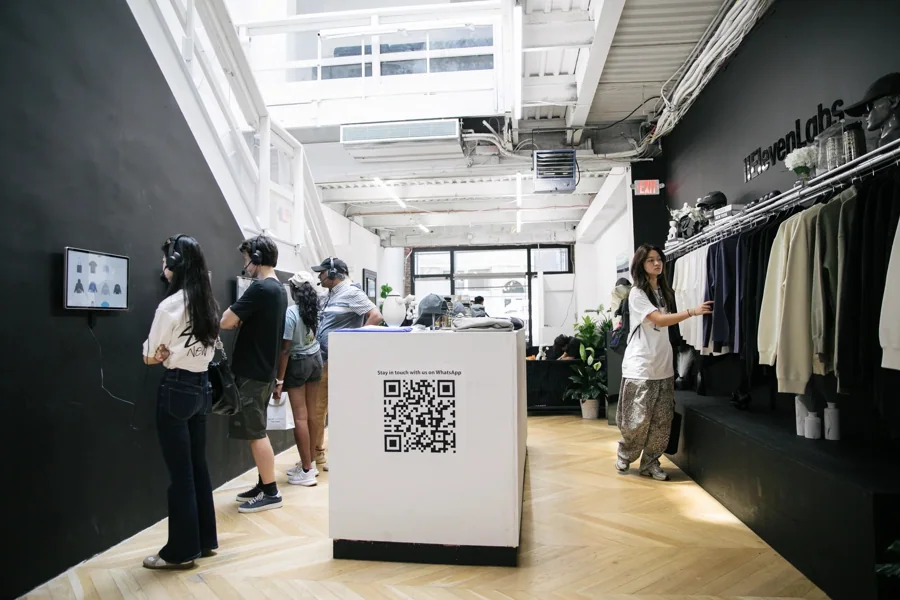
A coffee order can explain more than a product pitch. During New York Tech Week, ElevenLabs' SoHo store introduced voice AI through shopping, hospitality and a phone booth visitors could try for themselves.
How should a technology activation brief define the product demonstration?
Begin with one action a guest should be able to try, then describe what a successful attempt looks like. A curious passerby and an invited business guest may need different introductions. Decide whether each interaction is self-guided, hosted or scheduled before assigning space to it.
ElevenLabs brought voice AI into shopping, coffee and a phone-booth encounter in SoHo. The planning questions below use that documented mix to help structure the brief for a new technology activation.
Map the first interaction before the floor plan
Write down what someone sees from the street, how they learn what is available and where a host first helps. Ask whether a guest can try the product without blocking another activity. Use that sequence to brief the entrance, demonstration positions and places for longer conversations.
Agree who owns the technology and the physical touchpoint
Separate the product interface from its physical setting in the scope. Identify who supplies the application, hardware, account access and technical support, alongside the fixtures, power and on-site team. Ask each partner what must be ready for a shared rehearsal and who can resolve a problem during opening hours.
Check the service flow as well as the demonstration
If hospitality is part of the idea, trace the full guest journey from an order to collection. Consider how a host explains the interaction, where guests wait and how the service continues if a demonstration is unavailable. Confirm the responsibilities of the product and hospitality teams rather than leaving the handoff implicit.
Offer clear choices without making every guest do everything
A multi-touchpoint experience needs a legible choice of activities. Describe what each station offers and what help is available. Decide which touchpoints work independently and which depend on a prior step, then check that hosts can explain the options in plain language.
Rehearse the exceptions before opening
Walk through an ordinary visit and the situations that interrupt it: a queue, an unavailable device, a guest who needs assistance or a request for a deeper product conversation. Assign each handoff to an owner. Plan any photography or filming around those activities so content capture does not become an obstacle to participation.
What to include in a technology activation RFP
Include the audience, markets and dates; the product actions guests should try; the technology and creative assets already supplied; and the responsibilities you need a production partner to cover. Ask proposals to show assumptions, dependencies and rehearsal needs. If lead follow-up or visitor research is intended, name its owner and consent process separately from attendance or product use.
Who delivered the experience
POPUP led physical production and operations: venue coordination, layout, custom fixtures, storefront presentation, staffing, guest flow and content capture, working alongside ElevenLabs and its creative and technology partners.
Voice AI by ElevenLabs. Merchandise and store platform by Go Swag. Creative & UI by Studio Freight. Photography by Erica Westley.
What the experience made possible
Shopping, coffee and conversation gave visitors an approachable way to explore ElevenLabs through familiar everyday actions.
Project questions
Where did the experience take place?
ElevenLabs: New York, NY.
What was the delivery scope?
Venue & production coordination; Spatial experience & custom fixtures; Storefront & environmental branding; Retail staffing & daily operations; Guest journey & hospitality; Photography & edited films.
Explore related work
Further reading
For the wider event and campaign context: